The future of the fashion industry will be to produce less and more often
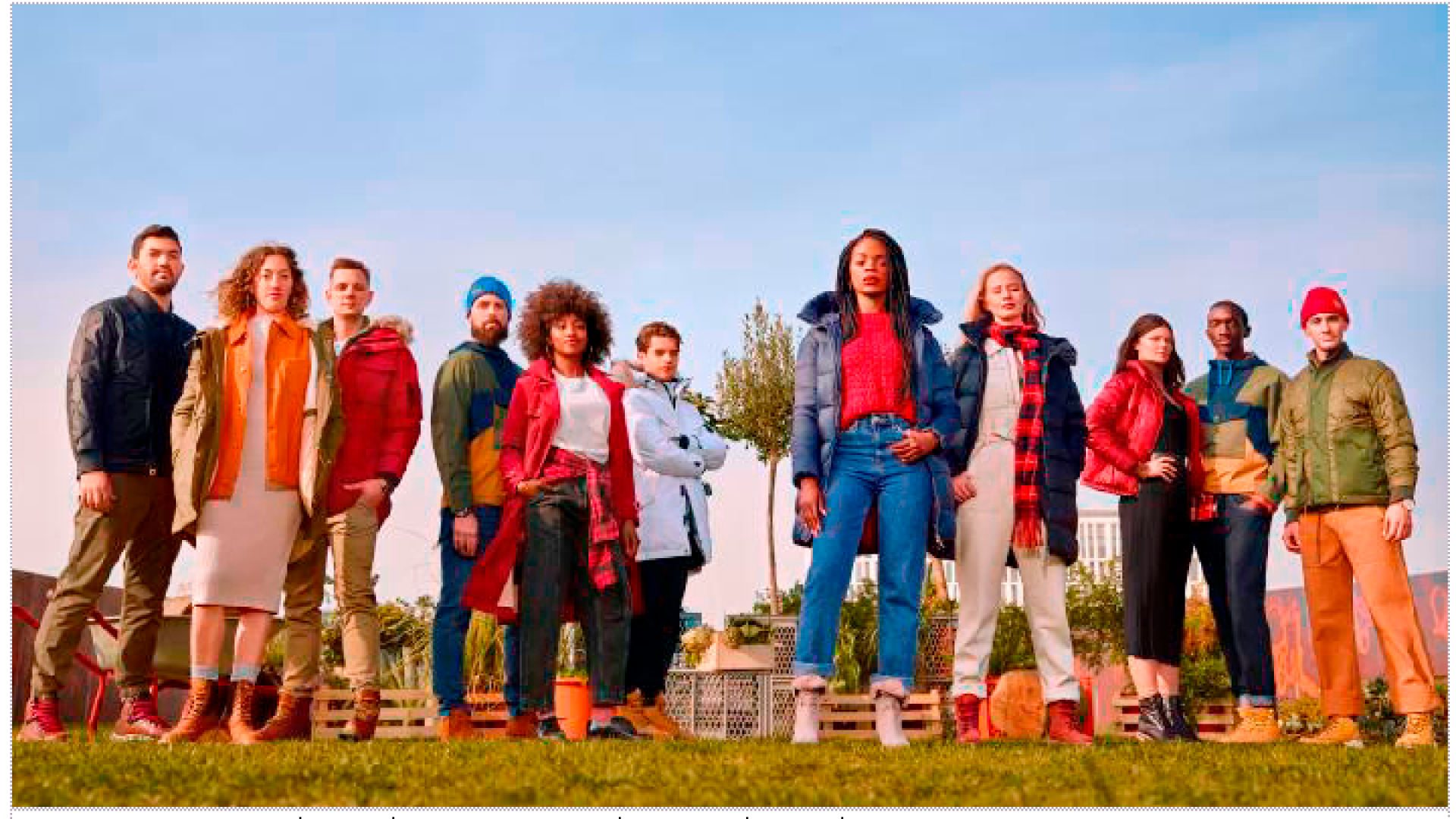


For almost two months, the shops have raised their shutters. At the same time, several fashion chains are announcing heavy cuts and renovations. Martino Scabbia Guerrini, head of VF EMEA (Europe, Middle East and Africa) based in Stabio, tells us about this difficult phase.
After a series of dramatic months, what kind of restart is the fashion sector experiencing?
In Europe during the lockdown we had to close all the shops and offices, while the logistics centres remained operational, albeit with all the necessary health security measures, and digital channels. Since mid-May we have reopened the shops, starting from Germany, Austria and Switzerland and ending with the United Kingdom. It was immediately clear that the reopening also means a new departure. There are important changes compared to the normality that we knew in February and some will be permanent’.
For example?
In the shops there are safety procedures to follow which imply a different experience for the customers. In the offices we have adopted a gradual and even more prudent return approach than that imposed by governments, also because technology in recent weeks has taught us that it is not necessary to return all of them immediately and we would not want to take any wrong steps right now. At the business level, reopening stores and regaining the usual consumer traffic is not immediate. On the other hand, fewer people enter but the propensity to buy is higher: those who arrive know what they want and buy immediately.
What structural changes have been accelerated with the pandemic?
Undoubtedly the strategic choices on technological investments have been a priority, we are doing in six months what was expected for the next three years. The industry is trying to create an ecosystem that increasingly integrates the physical world with the digital one. For VF, these are four distribution channels: its own physical and digital stores, together with external ones, for example Zalando-type platforms or multi-brand franchise stores. There has also been an acceleration of all aspects which, through technology, allow the consumer to have a much more active role in the process of design, production and brand growth.
In recent weeks there has been talk of various solutions for the fashion of the future: from on-demand production to local production, online fashion shows, buying less but better. In which direction will we go?
There are two aspects. The creation model must change, to move from the classic seasonality to a faster and more complex paradigm - which guarantees continuous creation by segmenting customers well. This change was already underway but must be intensified even more. Then there is the distribution: you need to create an ecosystem whereby products are sold when consumers ask for them and at full price, without entering the chains of the sale. That is, less quantity but all year round through faster and more flexible processes in which the consumer is more involved’.
A faster model does not clash with the idea that fashion must be slower to be more sustainable?
No, on the contrary - it would allow better control of what is produced and what is sold through a greater proximity to the various market segments. By detaching from the two seasons, the system becomes more responsible and therefore generates less excesses. It could even create moments of scarcity of product, to reset a mechanism that so far needed the continuous push to sell. To summarise the fashion of the future for me it will see the physical and digital spaces fully integrated with a maximization of productivity such as to minimize waste, through a more design-driven approach with the creative involvement of consumers.
Has the pandemic changed the discourse on sustainability?
For us as a group, no, we have had a clear vision for some time, with specific and measurable objectives, if ever now it accelerates on the agenda. But in recent weeks, with the lack of tourists who crowded the shops of the big European cities, we have seen the importance of also having local production and consumption, considered more sustainable. Local business models will not replace those based on global interconnections. However, it will probably lead to a new, perhaps better, balance which has yet to be consolidated. A bit like in the food sector’.
Swiss companies compared to European companies received more concrete state support during the lockdown. Do they have a real advantage in their hands at the moment of the restart?
‘I don't know if it's a specific advantage. Certainly, Switzerland in general offers many advantages for those who do business, including a solid political system that involves various types of security in the long run, as proved during the pandemic. We have also asked for help in other states, and on our part, we have made efforts to maintain full wages and jobs. After the sharp drop in turnover in the first quarter, we hope to return to full capacity by 2021. In any case, our long-term investment strategy does not change.
With regard to technology investments, should cooperation in brands with digital companies or universities also be strengthened in Switzerland?
There are already initiatives of this type, for example in Ticino there is that of a technological centre promoted by the Agire Foundation, USI and SUPSI in collaboration with local and international business realities. As VF we have been dealing for some time with the theme of digital transformation and globally we have set in motion a structure that already has a certain size and a team dedicated to Stabio. But local initiatives are welcome because they help to create centres of competence, which are always sought after and crucial, and they help companies, perhaps even smaller ones, to deal with these dynamics.