A new tram-train design released & bound for Lugano
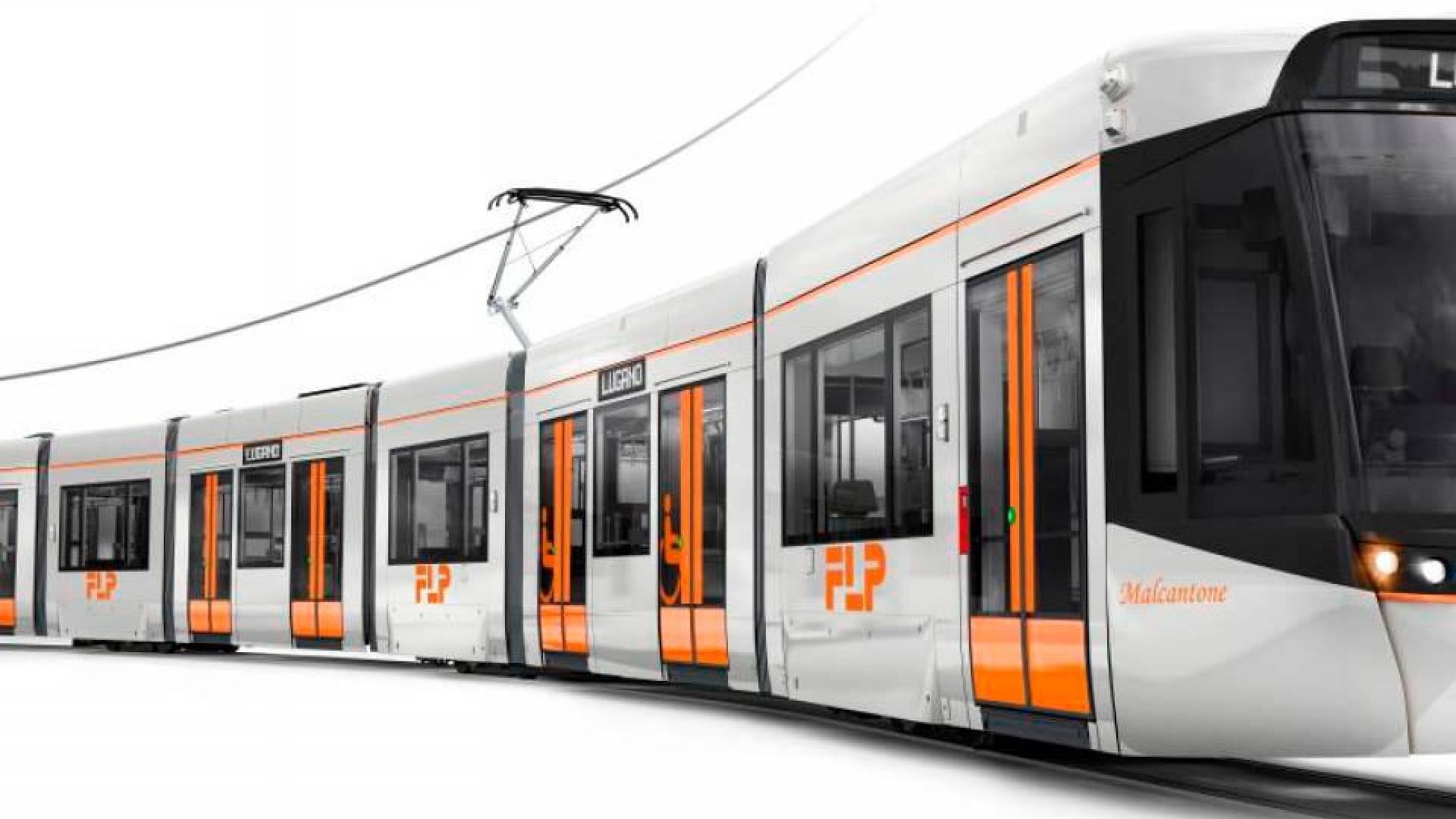

In the Stadler factory, technicians are working to complete the first tram-train bound for Lugano. It will be delivered along with its vibrant orange and white design to the FLP in March and will slowly be integrated until retirement of the 4/8 electric trains which have been running since 1978 between Lugano and Ponte Tresa (the smiley face has become a well known symbol) ‘This will be the last summer - underlines the director of the FLP Roberto Ferroni - without air conditioning on our trains’. But in reality, as he explains, everything will change, certainly not just the temperature in the wagons. It will be a revolution. The first ‘tram-link’ as mentioned will arrive in March and will then be subjected to a period of testing and approval of three months which will also allow time to serve to train FLP staff and prepare for entry into service to the public.
Nine on the way (every 15 days)
Starting from June the other 8 trains will arrive - every two weeks. In total, 12 vehicles have been purchased. Nine immediately, while the last 3 will be phased in throughout the new network being built (probably in 2029)
The first in Switzerland
Lugano will be the first region in Switzerland to use this brand new tram model which went into production in 2011 and which made its debut on the streets of Rostock, Germany. Recently, the city of Milan also signed a contract for the supply of 80 trains.
Features
It will be a revolution as mentioned. ‘It is a real tram, with its comforts’ explains Ferroni. ‘They will be subject to fewer vibrations and will be quieter and this will benefit both passengers and those who live near the track. They have greater acceleration and shorter braking time, and therefore are also safer. While for the driver, the large cockpit - designed specifically for cities - will offer superior visibility, which is fundamental precisely for when the tram finds itself traveling through urban areas’.
A little smaller
The convoys will be 45 metres long a little smaller than currently (which measure 57 metres). they will also be a little less wide (2.4 meters against the current 2.65). But the capacity (about 300 seats) will remain practically unchanged. The tram-link will be much faster than the Be 4/8 (it can travel at 80kms per hour, while today the FLP trains reach 60kms), it has been designed to facilitate access for the disabled (there are no ups and downs) and it is also suitable for carrying bicycles and strollers. In addition, all convoys will be under video surveillance both inside and outside.
It can be doubled
The capacity of the single train will not change much compared to today. The great advantage, however, will be that of being able to travel in double composition, thus connecting two convoys and totalling almost 600 passengers at once. A number that - for our reality and the size of our cities - is impressive. A solution that will be extremely useful at peak times. The future is therefore about to arrive and we will begin to see it in less than a year.
Take a look
Today the website has been made live showing the design, preparations and the approach to the entry into service of the new trams. At www.flpsa.ch/nuovitreni it it is possible to find out everything about the future trains. The site offers a technical description of the design, information on timing and the possibility to observe, step by step, the state of the art of the works on the trains ‘live’ from the Stadler factory.
Souvenir
There is the possibility - as with the chicken coop carriage of the old Lugano-Cadro-Dino railway - to keep one of these trains in Ticino as a souvenir? Unfortunately - Ferroni explains - sadly not. We would have liked it. But we don’t physically have a track on which to keep this train.
The orange trains are therefore destined - once restored - to go abroad. Or to be dismantled forever. More will be known in the coming weeks.
What will become of them?
In recent months speculation is that they would probably be taken to Madagascar, in Antananarivo, where Zurich engineer - Heinrich Brändli - dreamed of building a tram network. But Brändli has disappeared, and with him probably his project. ‘We - Ferroni explains - have a withdrawal contract from Stadler, which works with a French company. At the end of August they should decide which destination the old trains will have’.